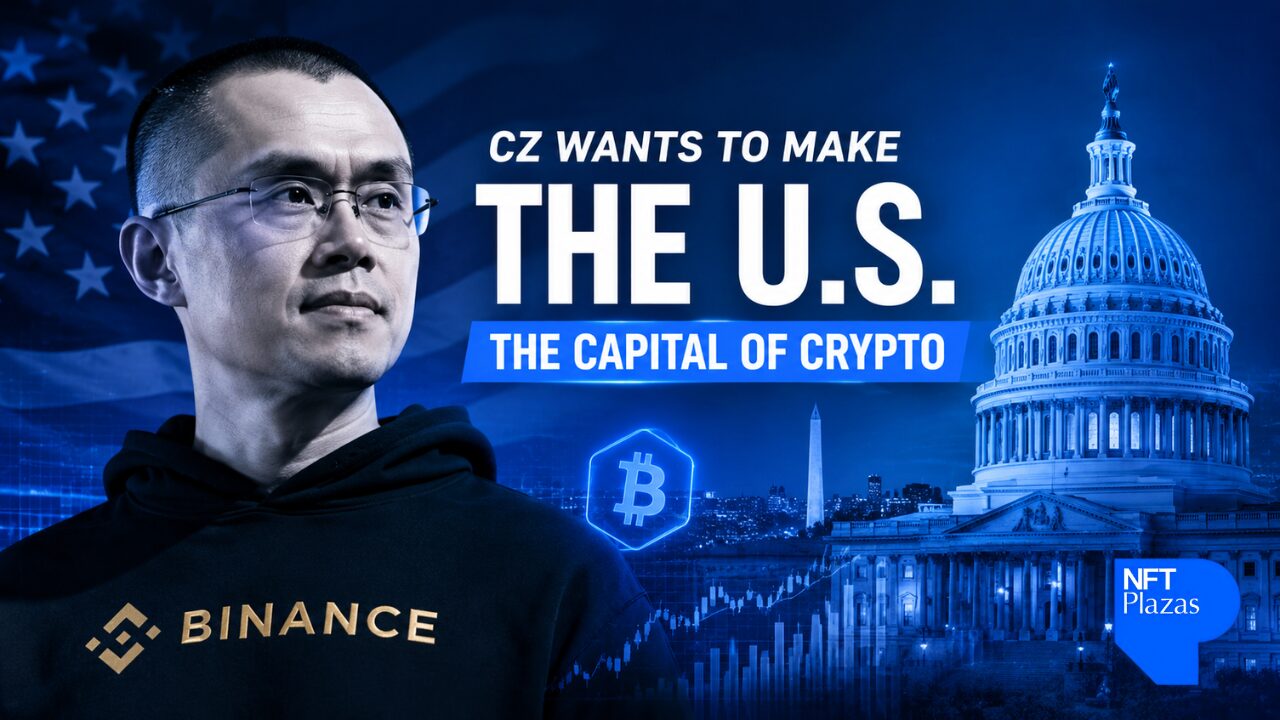
Changpeng “CZ” Zhao is making his most visible return to the American stage yet — and this time, he arrives bearing a mission rather than just an apology. CZ sat down with CoinDesk for a pair of interviews earlier this month, sharing his views on the exchange he founded, crypto’s trajectory in the U.S., and his post-prison activities. Across both conversations, the message was strikingly consistent: the United States has fundamentally turned a corner on crypto policy, and CZ intends to plant himself at the center of what comes next — whether Washington is entirely ready for that or not.
A Pardoned Man With a Plan
CZ resigned as Binance CEO in November 2023 after the U.S. Department of Justice alleged he violated the Bank Secrecy Act. He pleaded guilty, was sentenced to four months in prison in April 2024, and completed his sentence by September. In October 2025, he received a presidential pardon from Donald Trump.
That pardon proved the critical turning point for his reentry into American public life. In a post on X shortly after, Zhao vowed to “help make America the capital of crypto and advance Web3 worldwide.” Since then he has appeared at Consensus Miami, held meetings with Washington policymakers, and given his most detailed public remarks yet about Binance’s U.S. ambitions. “We want to do more in the U.S., and personally, I really want to help make the U.S. the capital of crypto,” he told CoinDesk. “I want to bring more crypto services into America.”

Binance Founder – Changpeng “CZ” Zhao
The Liquidity Gap Hurting American Traders
Beneath the headline ambitions sits a specific, data-grounded argument about what is structurally broken in the U.S. crypto market. CZ believes the U.S. is fundamentally disadvantaged by lower liquidity compared to global exchanges, meaning American consumers pay higher trading fees and face wider slippage on every transaction. “U.S. consumers don’t have access to the best liquidity,” he said. “That means they pay a much higher price to buy and sell crypto.”
The framing is pointed: crypto is the only place where U.S. consumers — operating within the largest capital markets in the world — do not get the best prices. With 80% of global GDP sitting outside the U.S. and other countries actively welcoming crypto activity, he argued there is no guarantee that domestic-only exchange growth closes the pricing gap fast enough to matter.
His proposed solution is to allow Binance.US to access Binance Global’s deeper order book. “We would love to be able to provide that in some way, either revitalize Binance.US or somehow provide U.S. consumers the best liquidity in the world and the best prices,” CZ said at Consensus Miami 2026.

CZ wants to make the U.S. the ‘capital of crypto
Ownership Without Operations
A recurring and carefully managed theme in CZ’s reemergence is the distinction between owning companies and running them. “I’m still the single largest shareholder of Binance, but I don’t run Binance,” he said. The same applies to Binance.US, where he now sits as a board member rather than an operator. Despite both companies sharing CZ as majority shareholder, they maintain separate leaderships and different investor groups — “two very separate companies,” in his words. Zhao ruled out directly leading Binance.US, expressing a clear preference for informally advising founders and portfolio companies rather than taking any executive seat.
Diagnosing the 2026 Bear Market
CZ’s return has coincided with a painful stretch for the broader crypto market. Bitcoin hit an all-time high above $126,000 last October and has since dropped approximately 50%, trading near $60,000 at the time of CoinDesk’s interviews. It opened 2026 near $89,000, briefly climbed above $96,000, then declined steadily.
CZ cited multiple drivers behind the downturn: investors rotating capital into AI, geopolitical tensions, and the typical four-year crypto market cycle. He remained measured rather than alarmed. “There’s going to be more and more demand for financial technologies, because there will be more and more transactions, so the industry will grow. So I’m not worried about the industry or the short-term price fluctuations,” he said. On the AI rotation specifically, he argued that capital moving into emerging technology sectors would ultimately prove positive for the broader digital asset ecosystem long term.
Regulation: Real Progress, Still Incomplete
CZ’s Washington tour has inevitably involved commentary on the regulatory environment that once made the U.S. hostile territory for Binance. He credited the passage of the GENIUS Act — establishing a federal stablecoin framework — as a meaningful step. On the broader Digital Asset Market Clarity Act, however, he struck a more tempered tone. He described such bills as “small, tactical things, which are really important, but not gonna impact the growth of crypto longer-term,” adding that U.S. regulatory leadership would likely persist even if the Clarity Act fails to pass this year. At the same time, he warned that delays risk ceding America’s competitive position to countries that move faster to establish their own frameworks.
The Stakes of the Comeback
According to Forbes, Zhao is currently the 17th-richest person in the world, with a net worth estimated at $111.1 billion as of April 2026 — much of it tied to BNB, giving him enormous personal stakes in the health of the very market he is championing. In 2026, he is building again through investments via YZi Labs and ongoing conversations with governments on crypto policy, but the biggest challenge that remains is trust following his legal case and pardon.
Whether CZ can convert his renewed access — to Washington, to regulators, to the American builder community — into concrete improvements in U.S. market structure is still an open question. But for an industry that spent years watching its biggest names retreat from American shores, the world’s most recognizable crypto founder now actively lobbying for U.S. dominance in digital assets is a signal that the political and regulatory winds have shifted in ways that seemed unthinkable just two years ago.