Key Takeaways
- Access starts with U.S. Pro subscribers age 18 and older.
- Users keep existing card rewards and eligible dispute protections.
- Merchants may collect recurring payments under terms users approve.
ChatGPT Wallet Connects AI Shopping With Card Payments
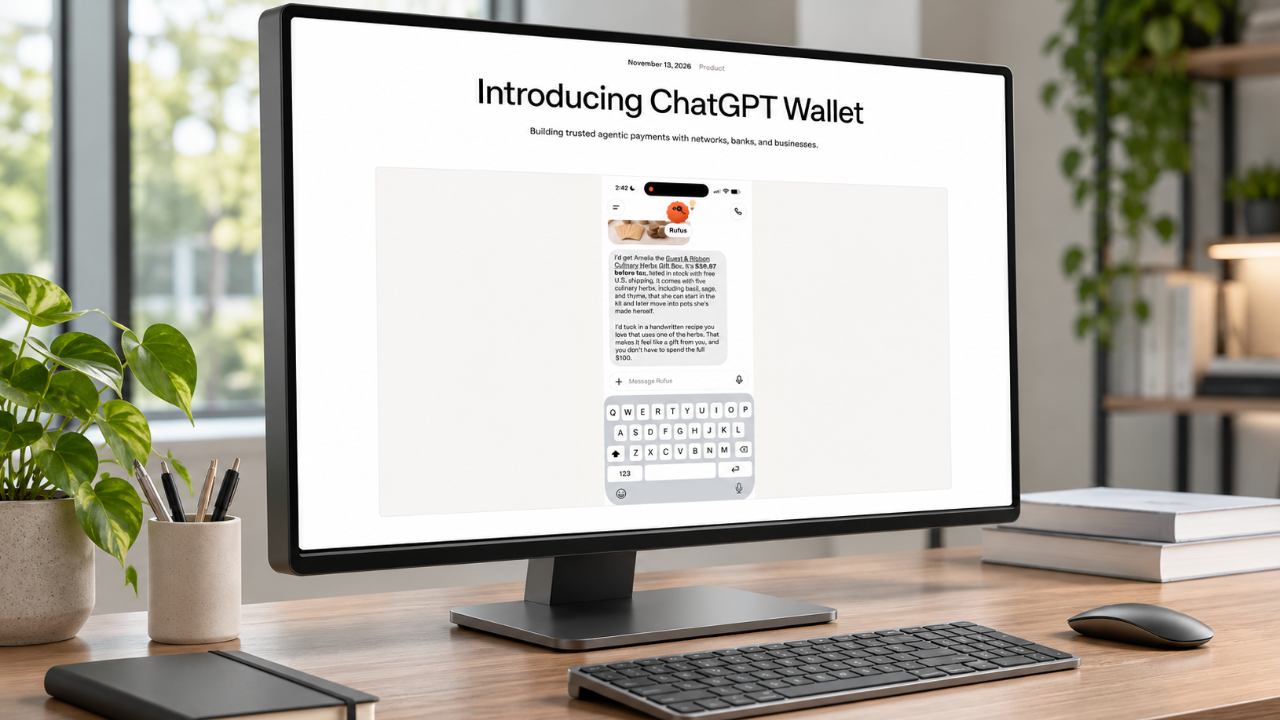
OpenAI began rolling out ChatGPT Wallet on Nov. 13, enabling users to have agents complete purchases on their behalf. OpenAI said ChatGPT had 1.2 billion weekly users, many using it to research products and compare options.
The company stated:
“Built in partnership with American Express, Mastercard, and Visa, ChatGPT Wallet will initially be available through dots for ChatGPT Pro subscribers in the U.S.”
These personal AI agents, called dots, handle tasks on users’ behalf around the clock, running on their own cloud computers and connecting to more than 4,000 apps through plugins. Users can reach a dot through ChatGPT, Slack, or Teams, while Custom Rules let them permit, block, or require approval for specific actions.
Before an agent-initiated purchase, customers review the items, total, and selected card, then approve payment using Face ID or another supported biometric check. A payment network supplies substitute card credentials, called a payment token, to charge the selected account. The substitute includes a card number, security code, and expiration date for checkout, keeping the actual card details hidden from the agent and merchant.
Wallet’s privacy notice says OpenAI collects purchase, contact, and device information, while its provider collects the full card number. OpenAI receives a tokenized credential and limited card details. The company says Wallet information is not sold or shared for targeted advertising.
U.S. Pro Access Comes With Checkout Restrictions
Eligible users must be U.S. Pro subscribers age 18 or older with a U.S. billing address and supported U.S.-issued American Express, Chase, Mastercard, or Visa cards. At launch, Wallet works only in dot conversations, excluding Chat, Work, and standalone Codex threads. Chase cardholders must be the primary account holder.
Approval allows checkout to proceed, while merchant confirmation establishes whether an order was placed. For recurring plans, merchants may retain the credential and collect subsequent payments under the agreed terms. Card issuers handle declined, disputed, or unrecognized charges, while sellers manage cancellations, returns, and refunds. Under its Wallet terms, OpenAI generally does not decide or fund merchant refunds or card chargebacks, except when legally required or separately promised.
Merchant security systems can block agents or decline legitimate purchases, OpenAI said. Its Commerce Partner Playbook addresses product information, website access, and payment compatibility, while businesses retain control over pricing and fulfillment. In Oct. 2025, Cloudflare announced an authentication collaboration with Visa, Mastercard, and American Express, using Web Bot Auth to help websites identify trusted agent traffic.
Payment Networks and Crypto Firms Develop Agent Tools
Mastercard’s broader work includes its Agent Pay framework, which it described as requiring agents to register and undergo verification while consumers control permitted purchases. Its agentic tokens extend technology already used for contactless payments and saved cards.
Visa pursued developer integration through its investment in Replit. The companies said they were working to integrate Visa Intelligent Commerce into the development platform. Their stated goal was to let developers build applications and agents capable of initiating transactions and accepting payments.
Moonpay offered another approach when it launched PayBox in July, connecting to ChatGPT and Claude through a custom connector. Users can require passkey approval for each transaction or authorize actions within preset limits.
Blockchain-based systems also support agent payments under delegated authority, allowing software to hold wallets and pay for services. OpenAI expects to support fuller purchase delegation over time, with users setting spending limits, categories, or time periods. Its planned model would let users pre-approve purchases within those limits.